

Wellington Seminar – A Step-Change (Inter)National Plan for the Integrated Seismic-Energy Rehabilitation of the Building Stock to Enhance Community Resilience and Sustainability – A Kiwitalian approach
November 23 @ 5:30 pm - 7:00 pm
WSP Wellington Office, Level 9, 100 Willis Street, Majestic Centre, Wellington
Presenter: Stefano Pampanin
Full Professor of Structural Engineering, University of Rome “La Sapienza, Italy
Adjunct Professor, University of Canterbury, Christchurch, New Zealand
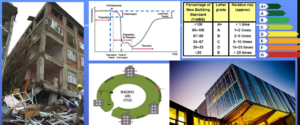
The urgency of a comprehensive and coordinated (inter)national plan for an “integrated” multi-performance rehabilitation of the existing building stock, able to combine architectural, functional, energy aspects and societal needs, while targeting a substantial improvement of structural and seismic safety, reducing the dramatic socio-economic-environmental impacts associated to earthquake events, is increasingly evident.
On the other hand, the severe mismatch between societal expectations over the reality of seismic performance of modern buildings has confirmed the need for a paradigm shift in performance-based design criteria and objective towards damage-control or low-damage design philosophy and technologies.
The presentation intends to provide an overview, based on extensive experience at national and international level, of recent significant advances and unique opportunities to enhance the community resilience and sustainability, based on the developments and implementation of either:
- next generation technologies for an integrated (structural skeleton + envelope + foundation system) resilient low-damage building systems, moving towards the concept of an “earthquake proof building” and
- unique proactive socio-economic/financial policies to sustain national-wide long-term programs for the integrated seismic-energy efficiency rehabilitation of the whole building stock.
To achieve this challenging and, at the same time, urgent goal, a paradigm shift is needed, relying on the synergic multi-disciplinary contribution of various stakeholders and shareholders. Equally important should be a dedicated effort to improve the communication to the non-technical audience, raise awareness in terms of overall impacts, risks and available solutions in order to co-create feasible pathways.
 Stefano Pampanin is Full is Professor of Structural Engineering at the Department of Structural and Geotechnical Engineering at the University of Rome “La Sapienza” since 2015.
He has been Professor of Structural Design and Earthquake Engineering and Chair of the Structural and Geotechnical Cluster at the University of Canterbury, Christchurch, New Zealand, where he joined in 2002 for 16 years.
He has been President of the New Zealand Society for Earthquake Engineering (2012-2014).
He received his Laurea magna cum laude in Civil/Structural Engineering at the University of Pavia, a Masters in Structural Engineering at the UCSD and a Ph.D. in Earthquake (Structural) Engineering at the Technical University of Milan. He has been a Fulbright Visiting Scholar at UCSD from 1998-1999.
In 2017, he has been nominated Fellow of IPENZ (Institute of Professional Engineers, NZ) and Fellow of New Zealand Society for Earthquake Engineering.
In the past 30, he has dedicated a significant effort in the Research Development and Design for low-damage seismic-resilient solutions in concrete and timber, as well as for the structural and seismic assessment and retrofit of existing structures, receiving a number of national and international awards.
Following the 2010-2011 Canterbury Earthquakes, he has played active and key roles – also as a President of NZSEE – in the recovery and post-earthquake investigation and codification activities.


