

- This event has passed.
NZSEE Seminar Earthquake Rupture Simulations
14 May 2025 @ 5:30 pm - 7:00 pm
Holmes NZ, Level 2, 254 Montreal Street, Christchurch| Online
5.30pm Networking | 6pm Presentations
Join NZSEE in Christchurch, and online, for two presentations on Earthquake Ruputre Simulations.
Duo Li will present how complex multi-fault ruptures shape seismic hazards in New Zealand. Duo will be presenting a series of multi-fault rupture scenarios, including both crustal faults and slab interface, and associated ground motions that account for long-term tectonics, regional rheology, high-resolution topography, shallow velocity layers, and fault networks in central New Zealand.
Camilla will cover the current status of earthquake simulators in Aotearoa New Zealand, outline preliminary thoughts on where such simulators might or might not be incorporated into seismic hazard assessment, and the questions which need to be addressed before they are used in this manner.
Register to attend in Christchurch now! Register to attend online now!
Dr. Duo Li
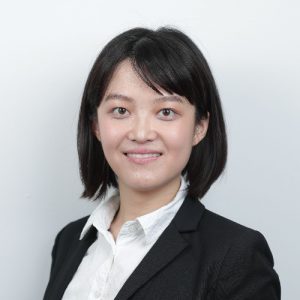 Dr. Duo Li received her bachelor’s and master’s degrees from Peking University in 2011 and 2013, respectively. She then pursued her Ph.D. in the Department of Earth and Planetary Sciences at McGill University under the supervision of Dr. Yajing Liu, focusing on the faulting mechanisms and slip behavior of both slow slip and megathrust earthquakes in the Cascadia subduction zone. After completing her Ph.D. in 2018, she worked as Postdoctoral Researcher in the Department of Earth and Environmental Sciences at Ludwig-Maximilian-University of Munich, Germany. Dr. Li joined GNS Science in 2023 as a seismologist, where she primarily works on developing physics-based dynamic rupture and ground motion simulations for the National Seismic Hazard Model project.
Abstract
New Zealand lies at the boundary between the Pacific and Australian plates and is highly vulnerable to multi-fault ruptures involving both subduction and crustal faults. Such a tectonic setting highlights the imperative need to understand how the multi-fault ruptures, particularly across different seismogenic regimes, contribute to seismic hazards. The current nation-wide probabilistic seismic hazard model largely relies on empirical ground motion models, with significant uncertainties due to paucity of devastating earthquake (e.g. Mw8.0+) and limited seismic records at near-source distances.
To address this research gap, we will use physics-based ground motion modeling to investigate fundamental characteristics of regional seismic response to complex multi-fault ruptures, leveraging advances in numerical methods to improve seismic hazard analysis. In this study, we simulate a series of multi-fault rupture scenarios, including both crustal faults and slab interface, and associated ground motions that account for long-term tectonics, regional rheology, high-resolution topography, shallow velocity layers, and fault networks in central New Zealand. We will focus on: (1) establishing a unified numerical workflow for dynamic rupture and modelling ground motions, (2) numerical validation using local intermediate seismic sources and strong motion records in Wellington basin, 3) evaluation of the impacts of multi-fault ruptures, seismic attenuation, and rupture directivity on the ground motion levels. Our simulated rupture scenarios will advance our knowledge of earthquake physics and fault kinematic source characterisation, while also providing theoretical references to improve empirical ground motion models and, consequently, seismic hazard analysis.
Dr. Camilla Penney
Dr Camilla Penney is a lecturer in Geodynamics and Tectonics at the University of Canterbury. She did her undergraduate and postgraduate degrees at the University of Cambridge, UK where she initially studied Natural Sciences, specialising in Physics, before moving into Geophysics for her PhD. She then held a Junior Research Fellowship at Queens’ College, University of Cambridge before moving to Aotearoa New Zealand in 2022 as a postdoctoral researcher working on earthquake simulators as part of the Resilience to Nature’s Challenges project. Camilla’s research interests include the kinematics and dynamics of continental deformation, particularly mountain building at subduction zones, and the application of geophysical and tectonic understanding to reducing deaths and negative impacts from earthquakes.
Abstract
Recent complex earthquakes in Aotearoa New Zealand, such as the 2010 Darfield earthquake, and the 2016 Kaikōura earthquake, have fallen outside the criteria considered “plausible” prior to their occurrence. The unexpected complexity of these earthquakes highlights a key challenge to seismic hazard assessment posed by the short length of historical and paleoseismological records: given that many possible earthquakes have no observational analogues, what makes an earthquake plausible? Physics-based earthquake simulators, such as RSQsim, are increasingly being proposed as a method to address this question, either as a compliment to traditional probabilistic hazard assessment, or as a method for generating scenarios for deterministic seismic hazard assessments. Such simulators combine numerical approximations to the physics of the earthquake cycle with inferred geometries of faults or fault networks to simulate catalogues of synthetic earthquakes much longer than the historical and paleoseismological records. These models have been developed primarily from the perspective of scientific interest in fault and earthquake mechanics. However, in Aotearoa New Zealand there is increasing discussion of using the resulting synthetic earthquake catalogues as an input to, or constraint on, seismic hazard assessments. This change of purpose raises the question of what constitutes appropriate testing and evaluation for earthquake simulators which may underpin life-safety decisions.
This talk will discuss the current status of earthquake simulators in Aotearoa New Zealand, outline preliminary thoughts on where such simulators might or might not be incorporated into seismic hazard assessment, and the questions which need to be addressed before they are used in this manner.
Register to attend in Christchurch now!


